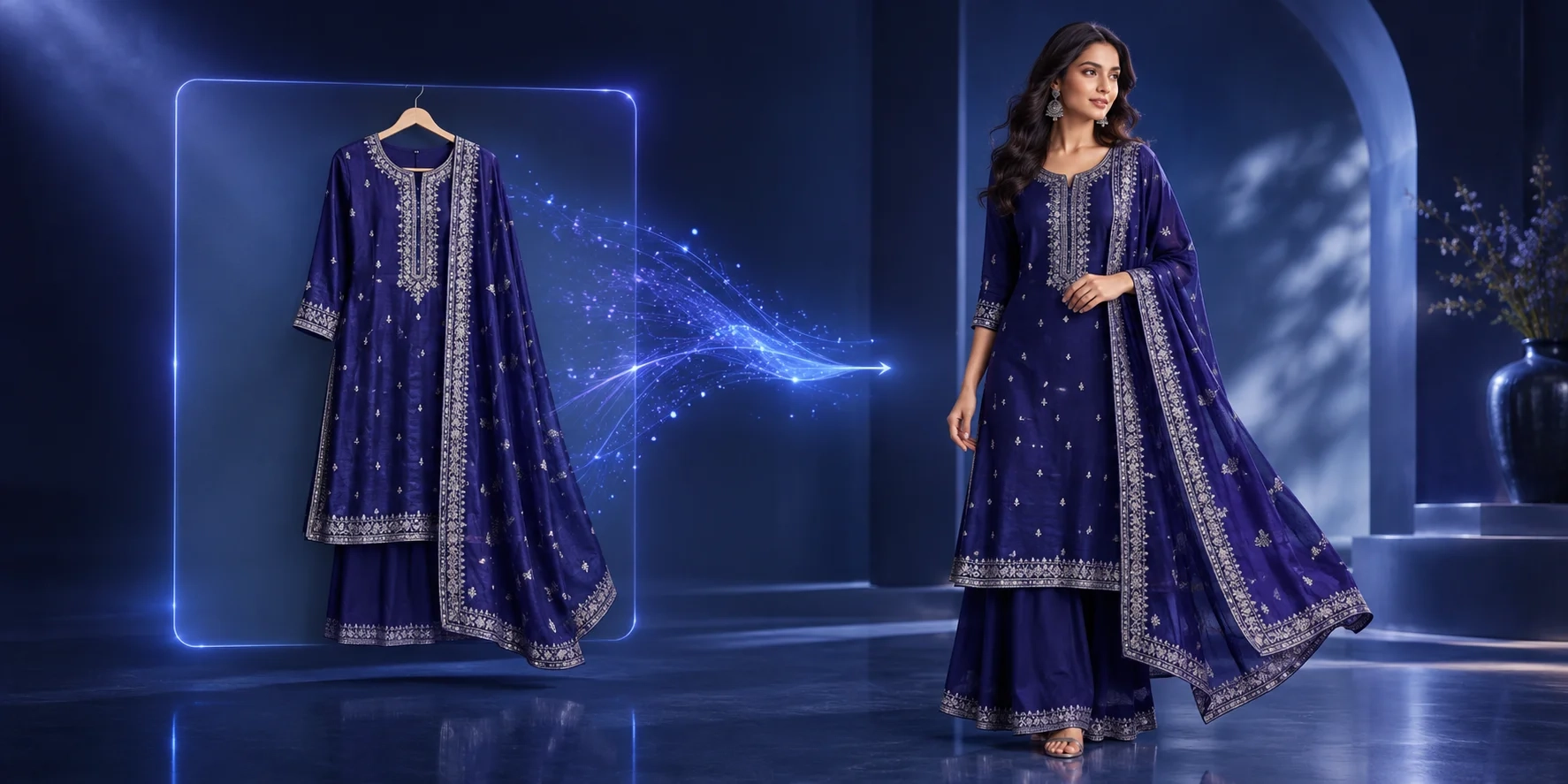
AI Fashion Catalogue Generator: Create Professional Clothing Product Photos Without a Studio Photoshoot
India’s fashion and textile industry is evolving rapidly as clothing brands, textile manufacturers, wholesalers, boutiques, and online sellers move towards digital commerce. From the textile markets of Surat to the fashion businesses of Ahmedabad and the technology-driven startups of Bengaluru, businesses are looking for smarter ways to create professional product images, build attractive catalogues, and sell clothing online.
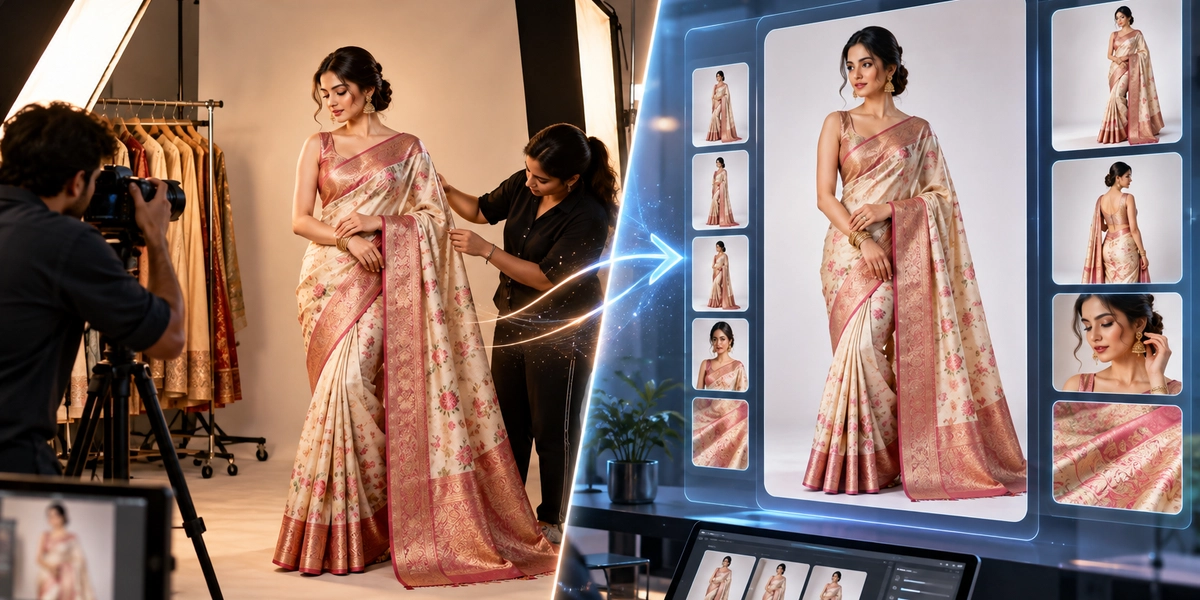
However, traditional clothing product photography can be expensive and time-consuming. Organising a photoshoot requires models, photographers, studios, lighting equipment, styling, and post-production editing. For businesses managing hundreds or thousands of clothing designs, producing high-quality product images for every new collection can become a major challenge.
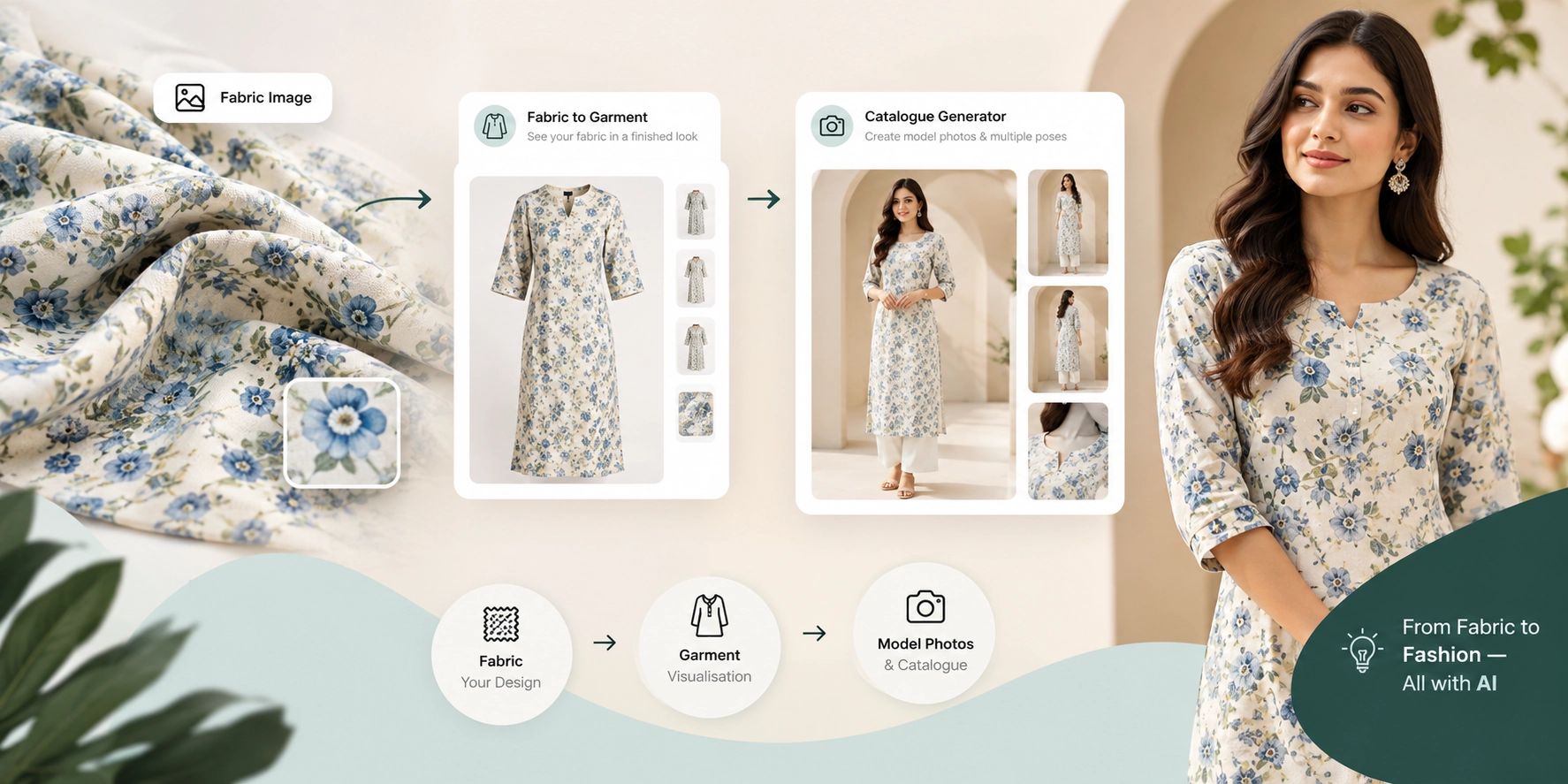
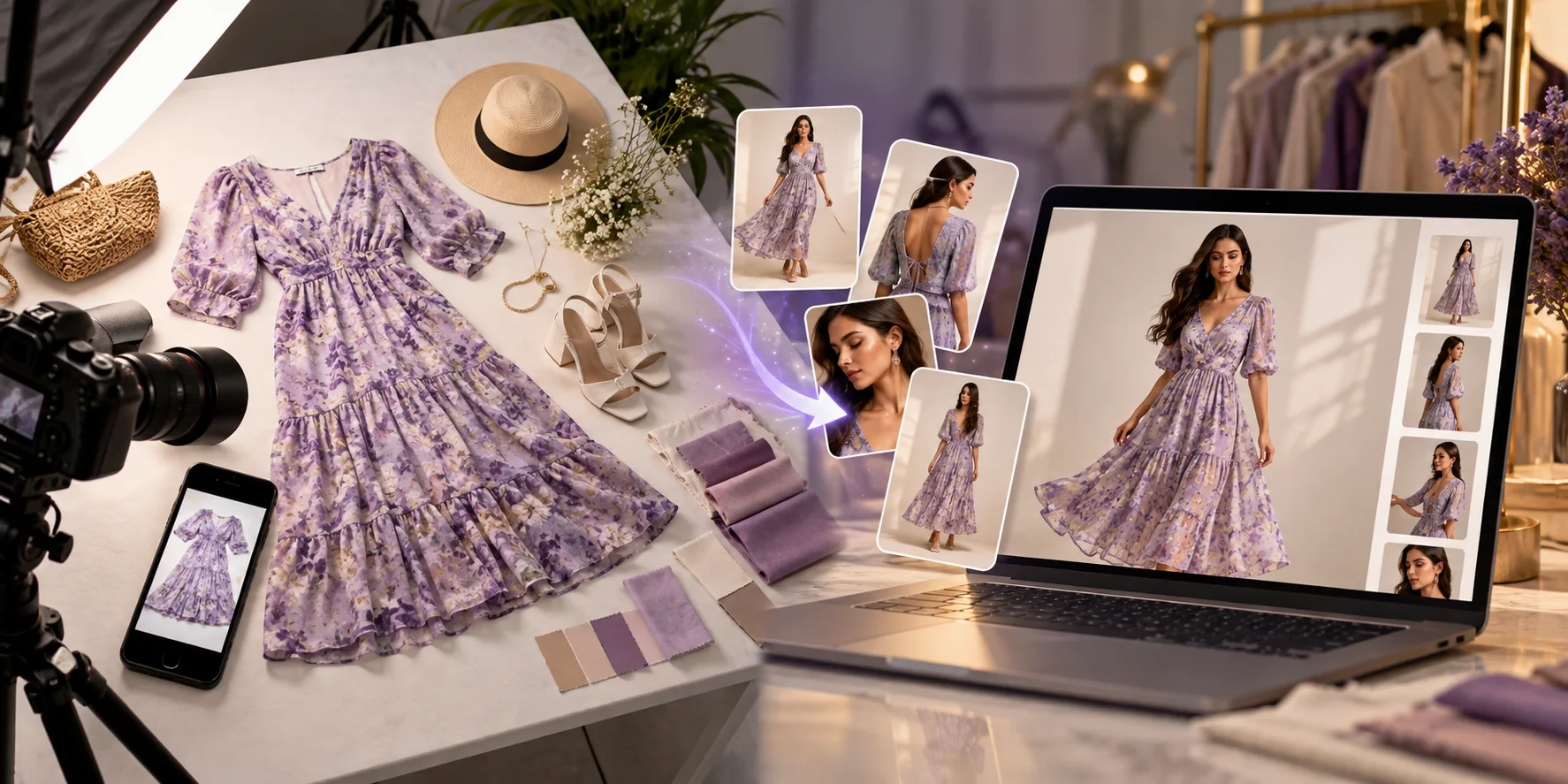
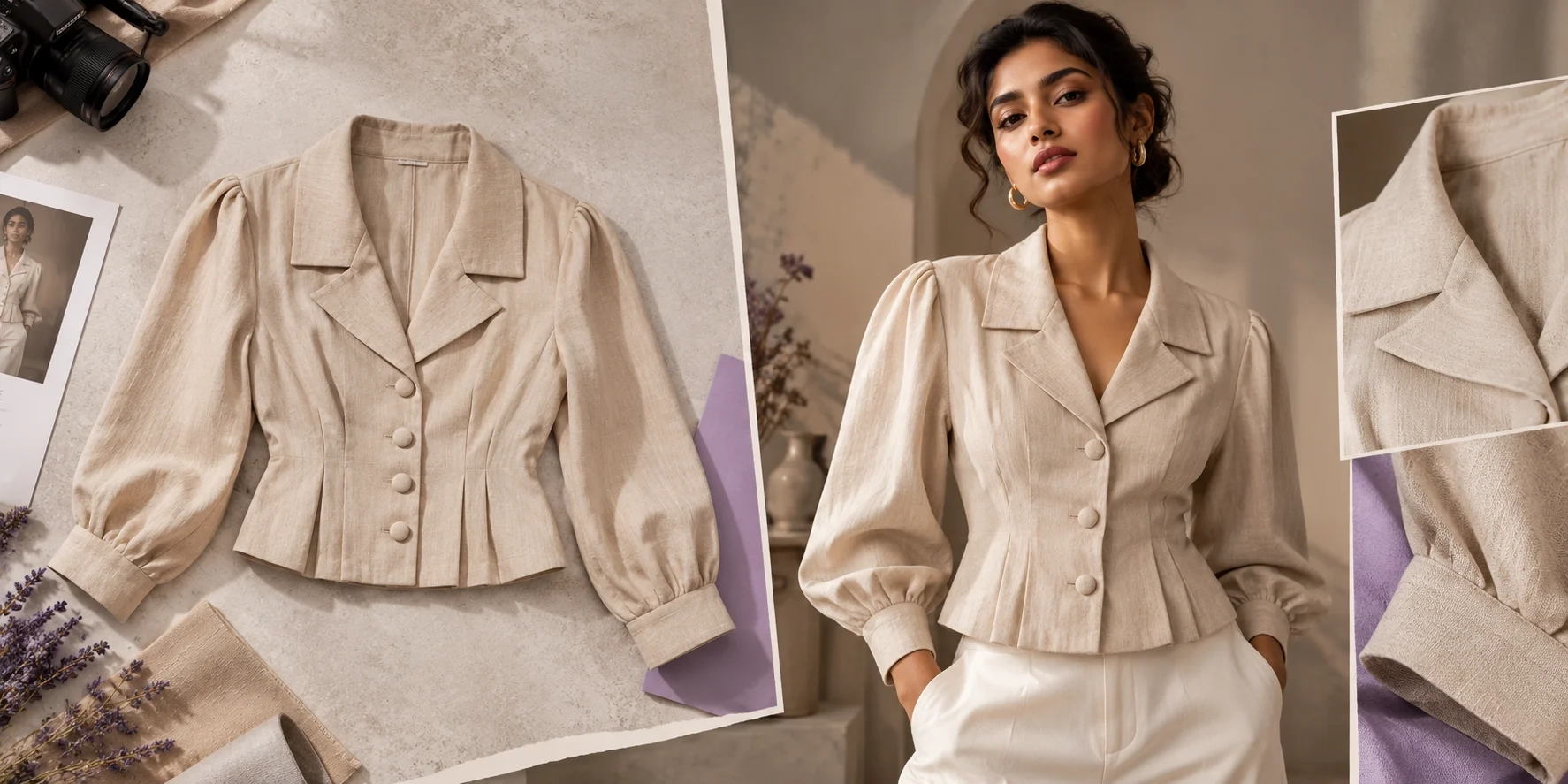
This is where an AI fashion catalogue generator can help. Using artificial intelligence, fashion businesses can transform ordinary garment photos into professional-looking product visuals without organising a traditional photoshoot for every design.
With Textile Magic AI's AI Catalogue Generator, businesses can explore a more efficient approach to creating digital fashion catalogues and preparing clothing products for online presentation.
What Is an AI Fashion Catalogue Generator?
An AI fashion catalogue generator is an AI-powered tool designed to help businesses create clothing product visuals and catalogue-ready images from garment photographs. Instead of arranging a complete photoshoot for every product, sellers can use digital tools to simplify parts of the image creation process.
Fashion businesses can use AI-powered catalogue workflows to prepare product images for ecommerce websites, online marketplaces, digital brochures, wholesale presentations, and social media marketing.
For example, a clothing manufacturer may have a photograph of a kurti, saree, shirt, dress, or other garment captured on a hanger or against a simple background. With an AI-assisted workflow, that product image can become the starting point for creating more polished fashion visuals.
The objective is to reduce repetitive production work while helping businesses present their collections professionally.
An AI catalogue generator can be especially useful for businesses that regularly introduce new designs, operate with limited photography budgets, or need to prepare product images quickly for multiple sales channels.
Why Indian Fashion Businesses Need AI Catalogue Generation
India has a diverse fashion and textile ecosystem, ranging from textile manufacturers and fabric wholesalers to independent designers, D2C brands, boutiques, and ecommerce sellers.
Each business has different product photography requirements, but many share the same challenge: creating attractive images consistently without increasing operational costs.
1. Managing large clothing collections
Textile manufacturers and wholesalers frequently handle numerous designs, colours, patterns, and product variations. Photographing every item individually can require substantial time and coordination.
An AI clothing catalogue generator can help streamline image preparation by introducing AI-assisted workflows into the product photography process.
Businesses can spend less time coordinating repetitive image production and more time managing their collections, communicating with buyers, and expanding their sales channels.
2. Reducing dependence on traditional photoshoots
Professional photoshoots remain valuable for premium campaigns, brand storytelling, and highly detailed fashion imagery. However, organising a separate shoot for every product is not always practical.
An AI fashion photography tool offers another option for routine catalogue production.
Depending on the tool and the quality of the source photograph, businesses may be able to generate polished product visuals without arranging a complete studio session for every design.
3. Supporting faster product launches
Fashion trends change quickly, and sellers often need to introduce new collections across websites, marketplaces, and social platforms.
AI-assisted catalogue creation can help businesses prepare product imagery more efficiently, making it easier to organise product launches and update online collections.
4. Improving the online shopping experience
Customers cannot physically examine clothing when shopping online. Product images therefore play an important role in helping them understand a garment's appearance, style, colour, and design.
Clear, consistent, and attractive product photography can make a clothing catalogue easier to browse and help customers evaluate products before purchasing.
AI-generated visuals should always be reviewed to ensure that they represent the actual garment accurately.
AI Fashion Catalogue Generator for Surat's Textile Industry
Surat, Gujarat, is widely recognised for its textile manufacturing, synthetic fabrics, sarees, dress materials, and wholesale clothing markets. Businesses across the city work with extensive collections and regularly introduce new designs for retailers and distributors.
For these businesses, product photography is not simply a marketing activity. It is also an important part of communicating designs to buyers.
How Surat textile manufacturers can benefit
A textile manufacturer may need to share hundreds of saree, kurti, fabric, or dress-material designs with retailers. Creating separate professional photoshoots for every design can make catalogue production expensive and slow.
An AI catalogue generator for Surat textile businesses can support a more scalable approach to visual content creation.
Potential applications include:
-
Saree manufacturers: Prepare catalogue-style images for different saree designs and collections.
-
Kurti manufacturers: Create polished visuals for new styles, patterns, and seasonal collections.
-
Fabric wholesalers: Organise product images for digital catalogues and buyer presentations.
-
Garment exporters: Prepare visual product presentations for online communication with prospective buyers.
-
Wholesale clothing suppliers: Improve the consistency of product imagery shared with retailers and distributors.
For Surat's textile businesses, the goal is to make digital product presentation more efficient without losing sight of the original garment's details.
When using AI for sarees, embroidery, zari work, prints, borders, and fabric textures require particular attention. Businesses should compare generated images with the original product before publishing them.
AI Catalogue Generator for Ahmedabad Fashion Brands
Ahmedabad has an established textile and garment ecosystem, alongside growing businesses selling fashion products through digital channels.
Boutiques, clothing manufacturers, independent designers, and ecommerce brands need product imagery that communicates their collections clearly and consistently.
An AI fashion catalogue generator in Ahmedabad can help businesses explore alternatives to repetitive manual photography workflows.
For example, a boutique launching a new kurti collection may need product images for its website, social media accounts, and promotional campaigns. An AI-assisted workflow can help prepare additional visual assets from suitable garment photographs.
Similarly, clothing brands can use catalogue-generation tools as part of their product launch process, subject to image quality, garment complexity, and the capabilities of the chosen tool.
AI-assisted catalogue creation may be particularly helpful for smaller brands that want to improve their digital presentation without investing in a full in-house photography setup.
AI Product Photography for Bengaluru's Ecommerce Businesses
Bengaluru has a strong technology and startup ecosystem, making it a relevant market for ecommerce brands, D2C businesses, online fashion retailers, and technology-enabled clothing companies.
For these businesses, product photography needs to fit into a broader digital commerce workflow that includes website management, product listings, marketing campaigns, and catalogue updates.
An AI product photography tool for clothing brands can help simplify the visual content preparation process.
Fashion businesses operating Shopify stores, independent ecommerce websites, and online marketplaces may benefit from using AI-assisted imagery alongside their existing product management systems.
Potential applications include:
-
Preparing product images for new online collections.
-
Creating additional visual variations for marketing campaigns.
-
Supporting catalogue updates when new designs arrive.
-
Developing visual assets for product landing pages.
-
Improving the consistency of clothing imagery across digital channels.
Bengaluru-based startups and fashion brands can also explore AI catalogue generation as part of a wider automation strategy, connecting content creation with their existing ecommerce and marketing workflows where suitable integrations are available.
How Textile Magic AI Helps Create Clothing Catalogues
Textile Magic AI provides an AI-powered catalogue creation tool for businesses exploring more efficient ways to prepare fashion product visuals.
The tool is relevant to clothing brands, textile businesses, manufacturers, wholesalers, boutiques, and online sellers looking to simplify their catalogue creation workflow.
Rather than treating every product image as a completely separate photography project, businesses can explore AI-assisted image creation as part of their regular product preparation process.
Step 1: Prepare your garment photograph
Start with a clear photograph of the actual garment. Good lighting, a visible product outline, and minimal background distractions can help the AI interpret the item.
For sarees, kurtis, shirts, dresses, and other clothing products, ensure that important design elements are visible in the original image.
Step 2: Use the AI catalogue tool
Visit the Textile Magic AI Catalogue Generator and explore the available options for creating product visuals.
Choose the appropriate workflow according to your garment photography requirements and the features currently available in the tool.
Step 3: Generate and review your visuals
Review the generated output carefully. Check garment shape, colour, patterns, embroidery, borders, and other identifying details.
AI-generated images can sometimes introduce inaccuracies, particularly when a garment contains intricate designs or complex draping. Always verify that the output represents the original product appropriately.
Step 4: Prepare images for your sales channels
Once approved, organise the images according to your business requirements. Potential destinations include ecommerce product pages, digital catalogues, wholesale presentations, and social media campaigns.
Maintain consistent image dimensions, naming conventions, and product information to make catalogue management easier.
Traditional Clothing Photography vs AI Catalogue Generation
Traditional photography and AI catalogue generation serve different purposes. Understanding the difference helps businesses choose the right workflow.
Traditional clothing photography provides direct control over the model, studio lighting, poses, styling, and physical presentation of a garment. It is valuable when a brand requires precise creative direction, campaign imagery, or detailed physical representation.
AI catalogue generation can help reduce repetitive image-production work and provide an alternative for businesses that need product visuals at scale.
Traditional photography may involve studio rental, photographer fees, model costs, styling, and editing. AI-assisted production may reduce the need for some of these activities, although tool subscriptions, generation credits, review time, and image correction can still involve costs.
The most suitable approach depends on the product, budget, quality requirements, and intended use.
Many businesses may benefit from a hybrid workflow: using professional photoshoots for flagship campaigns and AI-assisted catalogue creation for routine product presentation.
Who Should Use an AI Fashion Catalogue Generator?
An AI fashion catalogue generator can be useful for several types of fashion and textile businesses.
Textile manufacturers and wholesalers
Businesses handling large product collections can explore AI-assisted workflows for preparing digital product presentations and sharing designs with buyers.
Saree and ethnic-wear brands
Saree sellers, kurti brands, lehenga businesses, and other ethnic-wear retailers can investigate AI-assisted imagery for catalogue preparation. Intricate embroidery, fabric patterns, and draping should receive additional quality checks.
Shopify and ecommerce sellers
Online sellers need product imagery for listings, collection pages, promotional banners, and marketing campaigns. AI-assisted image creation may help them prepare additional visual content more efficiently.
Boutiques and independent designers
Smaller fashion businesses can use AI catalogue tools to explore new ways to present collections without organising a separate traditional shoot for every product.
Exporters and B2B clothing businesses
Manufacturers and exporters often communicate with buyers who need clear visual references for product selection. Well-organised digital catalogues can support this process, provided product details remain accurate.
Best Practices for High-Quality AI Clothing Product Images
Using an AI tool is only one part of producing effective product visuals. The quality of the source photograph and the final review process are equally important.
Use clear source photographs. Avoid heavily blurred images, poor lighting, and photographs that hide important garment details.
Preserve product accuracy. Check colours, prints, embellishments, stitching, and garment construction against the original product.
Maintain catalogue consistency. Use a consistent visual style across related products so customers can navigate the collection easily.
Optimise images for websites. Compress images appropriately, use suitable formats such as WebP where supported, and provide descriptive alternative text for accessibility and search visibility.
Review before publishing. Do not assume that an AI-generated image is automatically accurate. Inspect every image before using it to represent a product for sale.
Choose visuals according to the channel. A wholesale catalogue may prioritise clear product details, while a social media campaign may require a more editorial presentation.
These practices help businesses balance visual appeal with reliable product information.
How AI Catalogue Generation Supports Fashion SEO
Product imagery is an important component of an ecommerce website, but ranking in search engines requires a broader strategy.
An AI catalogue generator can support the creation of product visuals, while a well-optimised website helps search engines understand the products and pages those images represent.
Fashion businesses should use descriptive product titles, unique product descriptions, relevant image alt text, logical collection structures, and internal links between related pages.
For example, a Surat-based textile supplier selling sarees online could create dedicated collection pages for different saree categories. An Ahmedabad clothing brand could develop pages around its kurti collections, while a Bengaluru-based D2C brand could organise product pages around relevant fashion categories.
Conclusion
India's fashion and textile businesses are increasingly exploring digital tools to improve the way they present products online. From Surat's textile manufacturers to Ahmedabad's boutiques and Bengaluru's ecommerce brands, creating professional clothing catalogues efficiently can support product launches, digital marketing, and online sales operations.
An AI fashion catalogue generator offers a practical option for businesses that want to simplify parts of the product photography process without arranging a traditional photoshoot for every garment.
By combining clear source photographs, AI-assisted image creation, careful quality checks, and effective ecommerce SEO, businesses can build more organised digital catalogues while maintaining a focus on product accuracy.
Explore the Textile Magic AI Catalogue Generator to discover how AI-assisted catalogue creation may fit into your fashion business workflow.